Introduction
Naturally, my experience with Bill Rebane’s The Capture of Big Foot didn’t discourage me from digging even deeper into the annals of vintage Bigfoot cinema. As you could already tell from my last review, that archive isn’t exactly small, and pretty much every single entry would qualify for a write-up on a site called Badmovies.
Aside from the fact that I’ve since discovered even more Bigfoot films from the 1970s, today’s subject is the previously mentioned Curse of Bigfoot—a film whose production history ultimately turns out to be more interesting than the movie itself.
It all began during the golden age of the monster movie, the 1950s, when just about every week another cheap film featuring men in costumes was thrown into drive-in theaters. At some point, the Flocker brothers decided they wanted to make a movie of their own. IMDb lists the release year as 1958, while other sources mention 1964—claims that were later denied by actress Jan Swihart (who played Sharon).
In any case, this no-budget production—none of the participants were paid during the six weeks of “shooting,” and the quality of the film makes you seriously question whether any money was involved at all—was screened sometime around 1958 exclusively in the brothers’ hometown of Upland, east of California, under the title Ivanpah. It never played anywhere else.
At some later point, the film was renamed Teenagers Battle the Thing, a title that fit the zeitgeist much better and aligned it with films like Teenagers from Outer Space (1959) or I Was a Teenage Frankenstein (1957)—all of which are, of course, vastly superior. Given its modest runtime of barely an hour, the film would likely have vanished into complete obscurity, as it was nothing more than a local hobby project by two teachers and a few film students from nearby high schools.
Then the Bigfoot hype of the 1970s rolled in, and the brothers presumably realized they could make a quick buck off the trend. So they took the 1958 footage, shot a few new scenes in a classroom, added some stock footage, and voilà: a brand-new Bigfoot movie ready to be sold to a TV station.
I doubt anyone paid more than pocket change for this junk, but then again, it probably didn’t cost much either.
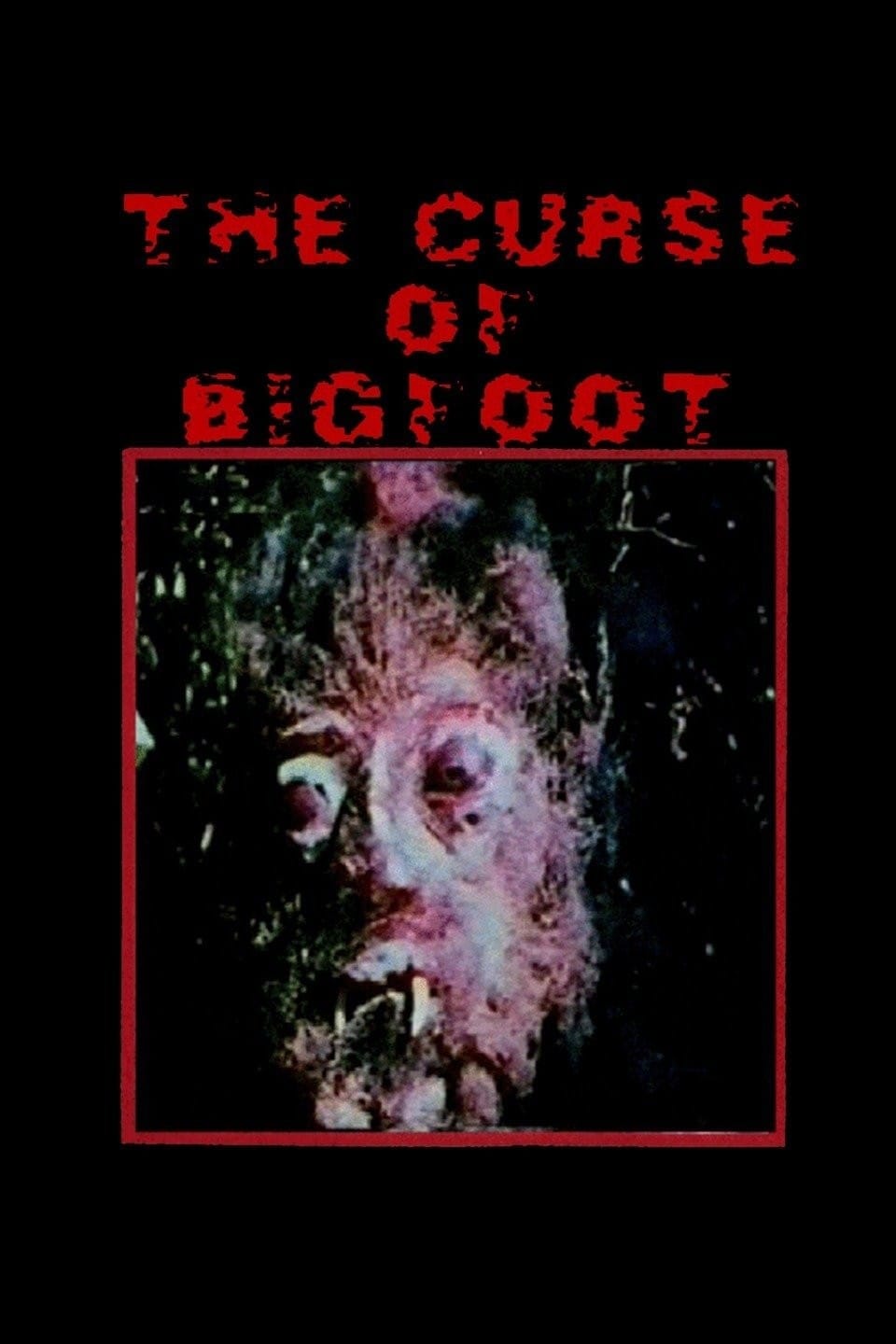
As for when exactly this happened, sources disagree yet again. IMDb lists 1975, while various comments mention 1976 or 1978. But that’s largely irrelevant—what matters is the result: an absolute no-brain, no-budget Sasquatch flick. And judging by the DVD cover (the 1958 version was later even released on VHS), it’s already clear that Bigfoot hits rock bottom here. At least there’s no annoying country song on the already ear-assaulting soundtrack this time.
Plot
An ordinary lake, mountains, and strange footprints in the mud. It’s immediately clear that we’re witnessing the dawn of time, long before recorded history—or so a portentous voice-over tries to convince us:
“It happened two million years ago. In steaming swamps and prehistoric jungles.The earliest man-like creature walked the earth. Not human, more beast than man. A monster of evolution.
It walked across the eons of time, slowly changing, becoming more and more human. More and more advanced. Until the Pleistocene, just thousands of years ago, man himself emerged.
But the change from beast into man was not a steady one and sometimes primitive man would find his life threatened, terrified by the appearance of a monster from the past.”
Immediately afterward, “Bigfoot” comes charging toward the camera, roaring, opening its mouth, while a bloody hand crawls over a rock. The title appears over a shot of a mountain face with a few houses in the background.
What any of this has to do with Bigfoot? Absolutely nothing.
But on we go—this time at night. Well, supposedly at night. The first shot shows the sun shining brightly through a canopy of leaves, but since the image is darkened and no people are visible, we’re apparently meant to assume it’s nighttime.
A house is shown from various angles (riveting stuff). A mysterious creature creeps through the underbrush and finally steps into view—though we only see it from below. Even then it’s obvious that this is less an ape-man and more an ugly mummy wearing a failed mud mask or something similar.
Slowly—very slowly—it approaches the house, where a dog is tied up and starts barking. After more shots of windows and a long zoom toward the door, the homeowner finally steps outside and “angrily” scolds his dog Scotty (arms crossed—more emotional expression than that is apparently beyond the actors here), telling him to quiet down since he’s making enough noise to wake the dead.
That line alone confirms that the filmmakers really want us to believe it’s nighttime, despite the sun shining high in the sky.
The dog is given a bowl of milk, and the creature continues its approach. Shots of the dog lapping milk alternate with shots of the advancing monster, the music swells, tension reaches unimaginable heights!
The monster is already standing behind the man, gets closer, a scream is heard—and suddenly we’re in a classroom, where a teacher is packing up a projector.
The teacher raises his arms and declares:
“Here we have the classic example of the Hollywood Monster.”
I strongly disagree. Every AIP monster looked miles better than this.
He continues:
“Now these horror films of the 50s seem corny today, just like unbelievable as the ancient sea monsters we have been studying, but don’t get the idea that monsters are a thing of the past. All of you have seen films about the devil and demon possessions, even the film about the great white shark was a monster story of sorts.”
This tells us two things: first, the film must have been sold to some unfortunate TV station after 1975, and second, cryptozoology apparently seems to be a standard subject in American high schools. When will this finally become mandatory here?
The teacher drones on until he holds up a photo of Bigfoot. We then get stock footage of radar stations, airplanes, and maps, while a voice-over explains the Bigfoot/Yeti myth. As a bonus, we’re treated to fitting stock footage of barren snowy landscapes.
From the Himalayas, we move on to the United States. After shots of floating logs and lumberjacks at work, we hear the story of two loggers who claim to have seen Bigfoot in Oregon a few years earlier.
A white car painfully crawls along a forest road until the two idiots spot an ape-like figure crossing their path. They stop. The guy with the cap (Larry) ventures into the forest, while his friend with the ridiculous ’70s haircut (John) stays behind, staring holes into the air.
We see Larry’s feet, then Bigfoot’s foot, which looks more like an old sock. Eventually John realizes Larry might be in danger and follows him. Just as he’s about to reach him, Larry screams, thrashes on the ground, and then lies still.
Back in the classroom, the teacher responds to a skeptical student with a Shakespeare quote. Since I have no desire to recite it here as well, I’ll just say that after the students laugh hysterically at some dumb joke, another “scholar” enters and tells yet another story—this one about a group conducting excavations on Native American land, where they discover a mummy…
Review
Those were the first 35 minutes, and the truth becomes painfully clear: Curse of Bigfoot isn’t really a Bigfoot movie at all. The remainder of the runtime uses footage from Teenagers Battle the Thing, which doesn’t feature Bigfoot at all, but rather a kind of prehistoric mummy.
And not even one tied to Native Americans—it’s apparently a Stone Age mummy. This presumably explains the bizarre opening monologue added by the Flocker brothers in 1975 (or whenever it was).
The first half hour might almost qualify as a Bigfoot movie—albeit a very bad one—since we at least see the shaggy forest creature wandering around. The “main plot,” if you can even call it that, then shifts entirely to the revived prehistoric mummy as the primary monster.
Not that this makes the film any better. Quite the opposite.
The first half is essentially like all those pseudo-documentary Bigfoot films of the 1970s: nature shots, stock footage, and a pompous voice-over try to distract the viewer from the fact that absolutely nothing interesting is happening on screen. That’s already dull, though occasionally still mildly amusing—like the monster’s initial appearance.
The second half drops even lower. The film starts weak and continuously loses what little tension it might have had. Just like in the cheapest monster films of the 1950s—those too weak to even show their monsters—people talk and talk, and nothing happens.
A group of cliché teenagers drives somewhere, climbs a mountain, and eventually finds a cave entrance (around minute 50). After the film’s only “effects scene” (some fog wafting out of the cave), things don’t improve. The teenagers bring the mummy back to the village, it comes to life, wanders around briefly, and is eventually burned.
Until then, there are exactly two monster attacks, both cut away from almost immediately. At least someone stitched together a full-body costume from grandma’s old clothes, even though we mostly just see the ultra-ugly papier-mâché face of the creature. Watching it peek through bushes was actually kind of funny—unfortunately, that hardly ever happens.
Otherwise, there’s truly nothing of relevance to see or hear, and even the “finale” is wrapped up very quickly (thankfully). The dialogue never reaches Ed Wood–level absurdity that might have made it entertaining.
Speaking of Ed Wood: he likely knew how to use stock footage more effectively. But when it comes to day/night continuity, the Flocker brothers struggle just as much. It’s not only the opening scene—later, the teenage couple Johnny and Sharon stroll down the road, waxing poetic about how beautiful the night sky is… while the sun is shining once again.
James Flocker’s script is simply awful and offers absolutely nothing one might want from a monster movie. It’s boring, stupid, and not even unintentionally funny.
The camera work offers little beyond a few POV shots and frequently fixates on actors’ feet or completely pointless details. We spend what feels like hours watching a dog drink milk or a car drive down a road. All of this is accompanied by music that desperately tries to inject “drama” into the least suspenseful scenes imaginable.
There’s no need to say much about the effects—the screenshots speak for themselves.
Overall, the film strongly reminds me of Larry Buchanan’s work. Those films were also sold to television, shared similar storytelling and effects quality, and suffered from a severe lack of spectacle. None of this stopped the brothers from continuing their film careers, resulting in titles like Das Geisterschiff (1992), Ghost Killer (1977), or The Lucifer Complex (1978), where one of them served as director, writer, or otherwise contributed.
As for the actors, there’s not much to say. There’s no continuous narrative, no emotional moments, and—heaven forbid—no character development. The cast consisted mainly of a handful of students.
Fun fact: one of the female students from the later-added footage also appeared in Manos: The Hands of Fate. If that isn’t fitting, I don’t know what is.
Image quality is abysmal, as expected, and surprisingly, the old footage doesn’t look any worse than the newly shot material. The film is available on YouTube and the Internet Archive, and there’s also a DVD from The Film Detective that proudly advertises the line “From the Producers of Plan 9 from Outer Space.”
I have no idea where that connection is supposed to be, but one thing is certain: Ed Wood would have made a vastly better and more entertaining film with the same amount of money—that is, practically none.
A more recent release came from the bottom-of-the-barrel label Alpha Video as part of their “Rewind Series,” which appears to recycle public-domain monster films.
Who actually played Bigfoot remains unknown. IMDb claims it was James Flocker, but I haven’t found any sources confirming this. Jan Swihart couldn’t remember either. Maybe they really did capture a genuine forest man and use him as an extra—and he’s been hiding ever since out of shame over the final result.
Conclusion
Good grief—Curse of Bigfoot was something truly awful. I’ve seen many films where even less happens: Monster A Go-Go, The Beast of Yucca Flats, The Creeping Terror… and this one fits right in.
And yet, it’s still not the worst Bigfoot film I’ve seen. That dishonor remains with In Search of Bigfoot, where even less happens. Sure, that one looks nicer, but due to the sheer obscurity of Curse of Bigfoot and the bizarre circumstances of its creation, this film is at least marginally more “interesting.”
Still, in the end it’s a boring, ultra-cheap affair that offers monster fans and trash enthusiasts virtually nothing.